Every country has its marvels and breathtaking landscapes, but these ten are blessed with a rare package of outstanding natural beauty and man-made wonders that enhance their territories with everything from beautiful cities to timeless villages, magnificent parks and pristine scenery. They are countries that offer a variety of sights and an abundance of inspiration from man and nature. 1 | ITALY The world's most beautiful city, the most inspiring cultural treasures, and magnificent scenery: Nowhere else in the world will you find a bigger concentration of beauty. There's Venice, Florence and Rome with their varied architecture, the natural masterpiece that is Tuscany with its rolling hills, vineyards and snow-peaked mountains. Then there's the perfect naturalist painting that is the Amalfi Coast or Lake Maggiore and the Alps and you get the sense that no country on Earth offers as much beauty anywhere you turn as Italy. 2 | SPAIN The most common image of Spain is of the dreadful overdevelopment of the Costa del Sol or of the coastline of some of the Balearic Islands, but Spain is so much more than that. It's perhaps the most diverse country in the world, with everything from white Mediterranean villages to sophisticated urban centers. You won't find a city with a greater sense of individuality than Barcelona, and from the Pyrenees to Andalusia, Spain could serve as the backdrop for any kind of film, book or painting. It's also the world's most seductive country, passionate about living the good life reflected on grand plazas in even the smaller cities, in well-preserved historic centers, and in the smallest of villages perched on hilltops. To top it all off, there are some of the world's grandest, most powerful and incomparable architectural treasures, from the Alhambra to the Great Mosque of Cordoba. 3 | FRANCE Paris exudes the most perfect atmosphere of cultural grandeur but although the capital gets all the attention, France offers so much more. Villages with abundant Old World charm are all over the country, from around the magnificent Loire Valley to verdant Provence. Then there's the glamorous Riviera and if you want to see the world's greatest palace (Versailles) and museum (the Louvre), here they are. But France is also a country of world-class living in outdoor cafes, in perfectly-preserved towns and in wine-producing regions such as Bordeaux and Champagne. If that's not enough, see the majesty of Mont St. Michel, the numerous chateaux all over the country and the spectacular panorama of the Chamonix valley. 4 | AUSTRALIA Australia is more than a country, it's a continent and still more than that. It's its own world, from the Outback and the Uluru-Kata Tjuta National Park with its world-renowned stone monolith to the Kakadu National Park. It's in fact wild parks and a wide range of landscapes that make Australia so extraordinary, from the Mornington Peninsula National Park facing the open sea to the Great Barrier Reef that's one of the natural wonders of the world, to the unspoiled tropical Whitsunday Islands, but then there's Sydney and its harbor, one of the most beautiful and iconic urban areas. Australia has it all, to be admired before or after a ride down the Great Ocean Road. 5 | GREECE The Greek Islands on the blue waters of the Aegean Sea are home to some of the world's most beautiful beaches. They're the first images of the country but then there's the majestic Mt. Olympus, extraordinary Meteora, and ancient ruins around the country. While Athens disappoints those looking for aesthetic inspiration, Greece is a country that truly satisfies all the senses and it's understandable how the idea of so many gods originated here. 6 | PORTUGAL For the pristine natural wonders of the volcanic Azores alone, Portugal would be on this list. Then there's the "floating garden" that is Madeira, the dramatic coastline and mystical capes of the mainland, the serene plains of the Alentejo with the stunningly-sited white medieval vilages of Marvão and Monsaraz, the Peneda-Gerês National Park, or the perfect collaboration of man and nature in the magic fantasy of Sintra and verdant Douro Valley. And while the old centers of Lisbon and Porto are inexplicably rundown and stubbornly neglected, it's hard to match their scenic beauty with their grand riverside settings. Everything is in a small scale but when all combined it's impressive how so much diverse beauty somehow fits in such a tiny country that seems to be a favorite of the sun. 7 | USA It has the ugliest cities in the developed world linked by shopping mall roads of fast food joints, car lots, billboards, cheap hotels and soulless suburbs (with populations obliviously living the American nightmare), but when it comes to nature, America really is the beautiful. There are the Hawaiian islands, the epic scale of the Grand Canyon, the extraordinarily clear waters of Lake Tahoe, California's Big Sur, the wildlife in Alaska, the breathtaking scenery of Monument Valley or of Yellowstone, Yosemite and the other great national parks, the forestland of the Great Smoky Mountains... The list of natural wonders seems to go on forever and then there's San Francisco to save the country on the offer of beauty in an urban setting. 8 | BRAZIL It has one of the world's most beautiful cities (Rio de Janeiro) and one of the ugliest(São Paulo) but Brazil really is blessed by nature. The Amazon is incomparable, impossible to begin to imagine its magnitude, and the horseshoe-shaped falls of Iguaçu regularly watched by a rainbow is one of the world's most breathtaking sights. The colonial baroque architecture of the northeast with their golden interiors mixed with singular traditions give it one of the world's most soulful atmospheres, and if the country's other major cities weren't so bland (Brasilia, Belo Horizonte, Curitiba, Fortaleza, Manaus, etc.), Brazil would actually rank higher on this list. 9 | SOUTH AFRICA Cape Town is one of the world's most beautiful cities (let's just say it's number 11 on our top 10 list), and the Kruger National Park is one of the most memorable experiences on the planet for anyone who visits. South Africa offers epic diversity of landscapes, from the Blyde River Canyon to the Drakensberg Mountains. With all of that it's almost easy to forget that it's also a country full of problems with a capital city that is best avoided, but escape to the Cape and grab your camera to photograph all in between and you'll be savoring one of the most awe-inspiring territories on the planet. 10 | GERMANY Yes, Germany. Perhaps the world's most underrated country, Germany is a place of fairy tales and architectural jewels. They're not necessarily found in the largest cities (Berlin, Frankfurt, Hamburg, or Cologne which are more vibrant than beautiful) but Munich has its charms and smaller cities such as Dresden, Leipzig and Potsdam have been preserved or restored to fairytale eye candy. But the real storybook Germany is found all along Bavaria's Romantic Road with its wealth of unbelievable castles, in the Alps' gorgeous lakes and mountains, in the magical land of the Rhine with its vineyards or in the enchanting Black Forest. Begin to tour the country and you'll discover a land of constant surprises, from the university city of Heidelberg, to old Bremen or Bamberg, to the wonderfully preserved medieval towns of Regensburg and Rothenburg. |

Showing posts with label Germany. Show all posts
Showing posts with label Germany. Show all posts
Monday, July 7, 2014
Top 10 MOST BEAUTIFUL COUNTRIES IN THE WORLD

Sunday, October 27, 2013
World War 1

On July 5, Kaiser Wilhelm secretly pledged his support, giving Austria-Hungary a so-called carte blanche or "blank check" assurance of Germany's backing in the case of war. The Dual Monarchy then sent an ultimatum to Serbia, with such harsh terms as to make it almost impossible to accept. Convinced that Vienna was readying for war, the Serbian government ordered the Serbian army to mobilize, and appealed to Russia for assistance. On July 28, Austria-Hungary declared war on Serbia, and the tenuous peace between Europe's great powers collapsed. Within a week, Russia, Belgium, France, Great Britain and Serbia had lined up against Austria-Hungary and Germany, and World War I had begun.
On July 5, Kaiser Wilhelm secretly pledged his support, giving Austria-Hungary a so-called carte blanche or "blank check" assurance of Germany's backing in the case of war. The Dual Monarchy then sent an ultimatum to Serbia, with such harsh terms as to make it almost impossible to accept. Convinced that Vienna was readying for war, the Serbian government ordered the Serbian army to mobilize, and appealed to Russia for assistance. On July 28, Austria-Hungary declared war on Serbia, and the tenuous peace between Europe's great powers collapsed. Within a week, Russia, Belgium, France, Great Britain and Serbia had lined up against Austria-Hungary and Germany, and World War I had begun.
World War I's Western Front (1914-17)
In the First Battle of the Marne, fought from September 6-9, 1914, French and British forces confronted the invading Germany army, which had by then penetrated deep into northeastern France, within 30 miles of Paris. Under the French commander Joseph Joffre, the Allied troops checked the German advance and mounted a successful counterattack, driving the Germans back to north of the Aisne River. The defeat meant the end of German plans for a quick victory in France. Both sides dug into trenches, and began the bloody war of attrition that would characterize the next three years on World War I’s Western Front. Particularly long and costly battles in this campaign were fought at Verdun (February-December 1916) and the Somme (July-November 1916); German and French troops suffered close to a million casualties in the Battle of Verdun alone.
In the First Battle of the Marne, fought from September 6-9, 1914, French and British forces confronted the invading Germany army, which had by then penetrated deep into northeastern France, within 30 miles of Paris. Under the French commander Joseph Joffre, the Allied troops checked the German advance and mounted a successful counterattack, driving the Germans back to north of the Aisne River. The defeat meant the end of German plans for a quick victory in France. Both sides dug into trenches, and began the bloody war of attrition that would characterize the next three years on World War I’s Western Front. Particularly long and costly battles in this campaign were fought at Verdun (February-December 1916) and the Somme (July-November 1916); German and French troops suffered close to a million casualties in the Battle of Verdun alone.

World War I's Eastern Front and Revolution in Russia (1914-17)
Over the next two years, the Russian army mounted several offensives on the Eastern Front but were unable to break through German lines. Defeat on the battlefield fed the growing discontent among the bulk of Russia's population, especially the poverty-stricken workers and peasants, and its hostility towards the imperial regime. This discontent culminated in the Russian Revolution of 1917, spearheaded by Vladimir Lenin and the Bolsheviks. One of Lenin's first actions as leader was to call a halt to Russian participation in World War I. Russia reached an armistice with the Central Powers in early December 1917, freeing German troops to face the other Allies on the Western Front.
Over the next two years, the Russian army mounted several offensives on the Eastern Front but were unable to break through German lines. Defeat on the battlefield fed the growing discontent among the bulk of Russia's population, especially the poverty-stricken workers and peasants, and its hostility towards the imperial regime. This discontent culminated in the Russian Revolution of 1917, spearheaded by Vladimir Lenin and the Bolsheviks. One of Lenin's first actions as leader was to call a halt to Russian participation in World War I. Russia reached an armistice with the Central Powers in early December 1917, freeing German troops to face the other Allies on the Western Front.
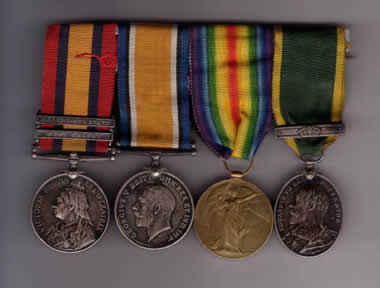
Gallipoli Campaign (1915-16) and Battles of the Isonzo (1915-17)
British-led forces also combated the Turks in Egypt and Mesopotamia, while in northern Italy Austrian and Italian troops faced off in a series of 12 battles along the Isonzo River, located at the border between the two nations. The First Battle of the Isonzo took place in the late spring of 1915, soon after Italy's entrance into the war on the Allied side; in the Twelfth Battle of the Isonzo, or the Battle of Caporetto (October 1917), German reinforcements helped Austria-Hungary win a decisive victory. After Caporetto, Italy's allies jumped in to offer increased assistance. British and French--and later American--troops arrived in the region, and the Allies began to take back the initiative on the Italian Front.
British-led forces also combated the Turks in Egypt and Mesopotamia, while in northern Italy Austrian and Italian troops faced off in a series of 12 battles along the Isonzo River, located at the border between the two nations. The First Battle of the Isonzo took place in the late spring of 1915, soon after Italy's entrance into the war on the Allied side; in the Twelfth Battle of the Isonzo, or the Battle of Caporetto (October 1917), German reinforcements helped Austria-Hungary win a decisive victory. After Caporetto, Italy's allies jumped in to offer increased assistance. British and French--and later American--troops arrived in the region, and the Allies began to take back the initiative on the Italian Front.

It was Germany's policy of unchecked submarine aggression against shipping interests headed to Great Britain that helped bring the United States into World War I in 1917. Widespread protest over the sinking by U-boat of the British ocean liner Lusitania in May 1915 helped turn the tide of American public opinion steadfastly against Germany, and in February 1917 Congress passed a $250 million arms appropriations bill intended to make the United States ready for war. Germany sunk four more U.S. merchant ships the following month and on April 2 President Woodrow Wilson appeared before Congress and called for a declaration of war against Germany.

It was Germany's policy of unchecked submarine aggression against shipping interests headed to Great Britain that helped bring the United States into World War I in 1917. Widespread protest over the sinking by U-boat of the British ocean liner Lusitania in May 1915 helped turn the tide of American public opinion steadfastly against Germany, and in February 1917 Congress passed a $250 million arms appropriations bill intended to make the United States ready for war. Germany sunk four more U.S. merchant ships the following month and on April 2 President Woodrow Wilson appeared before Congress and called for a declaration of war against Germany.
Toward an Armistice (1917-18)

The Second Battle of the Marne turned the tide of war decisively towards the Allies, who were able to regain much of France and Belgium in the months that followed. By the fall of 1918, the Central Powers were unraveling on all fronts. Despite the Turkish victory at Gallipoli, later defeats by invading forces and an Arab revolt had combined to destroy the Ottoman economy and devastate its land, and the Turks signed a treaty with the Allies in late October 1918. Austria-Hungary, dissolving from within due to growing nationalist movements among its diverse population, reached an armistice on November 4. Facing dwindling resources on the battlefield, discontent on the home front and the surrender of its allies, Germany was finally forced to seek an armistice on November 11, 1918, ending World War I.
The Second Battle of the Marne turned the tide of war decisively towards the Allies, who were able to regain much of France and Belgium in the months that followed. By the fall of 1918, the Central Powers were unraveling on all fronts. Despite the Turkish victory at Gallipoli, later defeats by invading forces and an Arab revolt had combined to destroy the Ottoman economy and devastate its land, and the Turks signed a treaty with the Allies in late October 1918. Austria-Hungary, dissolving from within due to growing nationalist movements among its diverse population, reached an armistice on November 4. Facing dwindling resources on the battlefield, discontent on the home front and the surrender of its allies, Germany was finally forced to seek an armistice on November 11, 1918, ending World War I.
World War
I's Legacy
At the peace conference in Paris in 1919, Allied leaders would state their desire to build a post-war world that would safeguard itself against future conflicts of such devastating scale. The Versailles Treaty, signed on June 28, 1919, would not achieve this objective. Saddled with war guilt and heavy reparations and denied entrance into the League of Nations, Germany felt tricked into signing the treaty, having believed any peace would be a "peace without victory" as put forward by Wilson in his famous Fourteen Points speech of January 1918. As the years passed, hatred of the Versailles treaty and its authors settled into a smoldering resentment in Germany that would, two decades later, be counted among the causes of World War II.
At the peace conference in Paris in 1919, Allied leaders would state their desire to build a post-war world that would safeguard itself against future conflicts of such devastating scale. The Versailles Treaty, signed on June 28, 1919, would not achieve this objective. Saddled with war guilt and heavy reparations and denied entrance into the League of Nations, Germany felt tricked into signing the treaty, having believed any peace would be a "peace without victory" as put forward by Wilson in his famous Fourteen Points speech of January 1918. As the years passed, hatred of the Versailles treaty and its authors settled into a smoldering resentment in Germany that would, two decades later, be counted among the causes of World War II.
At the peace conference in Paris in 1919, Allied leaders would state their desire to build a post-war world that would safeguard itself against future conflicts of such devastating scale. The Versailles Treaty, signed on June 28, 1919, would not achieve this objective. Saddled with war guilt and heavy reparations and denied entrance into the League of Nations, Germany felt tricked into signing the treaty, having believed any peace would be a "peace without victory" as put forward by Wilson in his famous Fourteen Points speech of January 1918. As the years passed, hatred of the Versailles treaty and its authors settled into a smoldering resentment in Germany that would, two decades later, be counted among the causes of World War II.
At the peace conference in Paris in 1919, Allied leaders would state their desire to build a post-war world that would safeguard itself against future conflicts of such devastating scale. The Versailles Treaty, signed on June 28, 1919, would not achieve this objective. Saddled with war guilt and heavy reparations and denied entrance into the League of Nations, Germany felt tricked into signing the treaty, having believed any peace would be a "peace without victory" as put forward by Wilson in his famous Fourteen Points speech of January 1918. As the years passed, hatred of the Versailles treaty and its authors settled into a smoldering resentment in Germany that would, two decades later, be counted among the causes of World War II.

Though tensions had been
brewing in Europe--and especially in the troubled Balkan region--for years
before conflict actually broke out, the spark that ignited World War I was
struck in Sarajevo, Bosnia, where Archduke Franz Ferdinand, nephew of Emperor
Franz Josef and heir to the Austro-Hungarian Empire, was shot to death along
with his wife by the Serbian nationalist Gavrilo Princip on June 28, 1914. The
assassination of Franz Ferdinand and Sophie set off a rapid chain of events:
Austria-Hungary, like many in countries around the world, blamed the Serbian
government for the attack and hoped to use the incident as justification for
settling the question of Slavic nationalism once and for all. As Russia
supported Serbia, Austria-Hungary waited to declare war until its leaders
received assurances from German leader Kaiser Wilhelm II that Germany would
support their cause in the event of a Russian intervention, which would likely
involve Russia's ally, France, and possibly Great Britain as well.
According to an
aggressive military strategy known as the Schlieffen Plan (named for its
mastermind, German Field Marshal Alfred von Schlieffen), Germany began fighting
World War I on two fronts, invading France through neutral Belgium in the west
and confronting mighty Russia in the east. On August 4, 1914, German troops
under Erich Ludendorff crossed the border into Belgium, in violation of that
country's neutrality. In the first battle of World War I, the Germans assaulted
the heavily fortified city of Liege, using the most powerful weapons in their
arsenal--enormous siege cannons--to capture the city by August 15. Leaving
death and destruction in their wake, including the shooting of civilians and
the deliberate execution of Belgian priest, whom they accused of inciting
civilian resistance, the Germans advanced through Belgium towards France.

On the Eastern Front of
World War I, Russian forces invaded East Prussia and German Poland, but were
stopped short by German and Austrian forces at the Battle of Tannenberg in late
August 1914. Despite that victory, the Red Army assault had forced Germany to
move two corps from the Western Front to the Eastern, contributing to the
German loss in the Battle of the Marne. Combined with the fierce Allied
resistance in France, the ability of Russia's huge war machine to mobilize
relatively quickly in the east ensured a longer, more grueling conflict instead
of the quick victory Germany had hoped to win with the Schlieffen Plan.
With World War I having
effectively settled into a stalemate in Europe, the Allies attempted to score a
victory against the Ottoman Empire, which had entered the conflict on the side
of the Central Powers in late 1914. After a failed attack on the Dardanelles
(the strait linking the Sea of Marmara with the Aegean Sea), Allied forces led
by Britain launched a large-scale land invasion of the Gallipoli Peninsula in
April 1915. The invasion also proved a dismal failure, and in January 1916
Allied forces were forced to stage a full retreat from the shores of the
peninsula, after suffering 250,000 casualties.


After the Battle of
Dogger Bank in January 1915, the German navy chose not to confront Britain's
mighty Royal Navy in a major battle for more than a year, preferring to rest
the bulk of its strategy at sea on its lethal U-boat submarines. The biggest
naval engagement of World War I, the Battle of Jutland (May 1916) left British
naval superiority on the North Sea intact, and Germany would make no further
attempts to break the Allied naval blockade for the remainder of the war.
With Germany able to
build up its strength on the Western Front after the armistice with Russia,
Allied troops struggled to hold off another German offensive until promised
reinforcements from the United States were able to arrive. On July 15, 1918,
German troops under Erich von Ludendorff launched what would become the last
German offensive of the war, attacking French forces (joined by 85,000 American
troops as well as some of the British Expeditionary Force) in the Second Battle
of the Marne. Thanks in part to the strategic leadership of the French
commander-in-chief, Philippe Petain, the Allies put back the German offensive,
and launched their own counteroffensive just three days later. After suffering
massive casualties, Ludendorff was forced to call off a planned German
offensive further north, in the Flanders region stretching between France and
Belgium, which he had envisioned as Germany's best hope of victory.


World War I took the life of more than 9 million soldiers; 21
million more were wounded. Civilian casualties caused indirectly by the war
numbered close to 10 million. The two nations most affected were Germany and
France, each of which sent some 80 percent of their male populations between
the ages of 15 and 49 into battle. The war also marked the fall of four
imperial dynasties--Germany, Austria-Hungary, Russia and Turkey.
Friday, August 30, 2013
World's top 10 electricity producing countries
 |
| Hub to Produce electricity |
Rank
|
Country
|
Electricity
- production (TWh)
|
|
1
|
China
|
4,604
|
|
2
|
United States
|
3,953
|
|
3
|
Japan
|
937.6
|
|
4
|
Russia
|
925.9
|
|
5
|
India
|
835.3
|
|
6
|
Canada
|
604.4
|
|
7
|
Germany
|
556.4
|
|
8
|
France
|
510
|
|
9
|
Brazil
|
509.2
|
|
10
|
Korea, South
|
459.5
|
|
Definition: This entry is
the annual electricity generated expressed in kilowatt-hours. The discrepancy
between the amount of electricity generated and/or imported and the amount
consumed and/or exported is accounted for as loss in transmission and
distribution with electricity forming an increasing share of the
world's total energy demand and electricity use growing more rapidly than
consumption of liquid fuels, natural gas, or coal, the total world electricity
generation grew by 4.1 percent in 2012.
(All units of electricity are measured in
Terawatt-hours. 1 TWh = 1000,000 MWh)
 |
USA:- Majority of its energy USA’s derived from fossil fuels,
but U.S. power plants use renewable energy sources—water (hydroelectric), wood,
wind, organic waste, geothermal, and sun — to generate about 13 percent of the
country’s electricity needs. It produced 3953
TWh of electricity.
Japan: - which produced 937.6
TWh of electricity, is one of
the major exporters of energy-sector capital equipment, and has a strong energy
research and development (R&D) program supported by the government, which
pursues energy efficiency measures domestically in order to increase the
country’s energy security and reduce carbon dioxide emissions.

Russia: - Federation holds the world’s second
largest coal reserves and produces most of its electricity from natural gas and
coal. It produced 925.9 TWh of electricity. Russia exports
electricity to Latvia, Lithuania, Poland and Turkey among other countries.
India: - In terms of fuel, coal-fired plants account for 56 percent
of India's installed electricity capacity, renewal hydropower accounts for 19
percent, renewable energy for 12 percent and natural gas for about 9 percent.
India produced 835.3 TWh of electricity.


Germany: - which set a solar power record by producing 22 gigawatts of electricity per hour produced 556.4 TWh of electricity. However, the main source of the country’s electricity production is coal.
France: - Nuclear power is the primary source of
electric power in France. France's nuclear power industry has been called a
success story that has put the nation ahead in terms of providing cheap,
pollution free energy. It produced 510
TWh of electricity.
Brazil: - with a production of 509.2 TWh has the largest electricity market in
South America. The country has the largest capacity for water storage in the
world, being highly dependent on hydroelectricity generation capacity, which
meets over 80 percent of its electricity demand.
South Korea: - Energy producers in South Korea were
dominated by government enterprises, although privately operated coal mines and
oil refineries also existed. The country produced 459.5 TWh of electricity.
Subscribe to:
Posts (Atom)